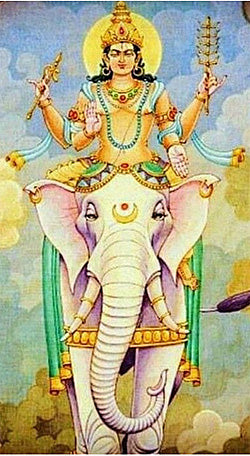
I will try to explain my answer in 3 parts.
1. What Rig Veda says about Indra?
2. Why Puranas contain stories of Indra, portraying in poor light?
3. The subtle interpretation of 2 Rig Vedic issues involving Indra killing demons.
—-
I) What Rig Veda says about Indra?
Rig Veda, which is the source of all spiritual concepts, never mentioned that Indra committed any sinful act.
Rig Veda mentions Indra as an epithet, along with many other epithets like AGNI, VISHNU, ADITI, VARUNA, etc, to indicate the formless ENERGY or BRAHMAN.
The parables, containing killing of demonic figures, viz., Vrtra, Panini, Vala, etc, by Indra, mentioned in Rig Veda were expanded in Brahmanas. In the Rig Veda, Indra is the king of the gods, commanding the most hymns (over 250).
——
II) Why Puranas contain stories of Indra, portraying in poor light?
As Vaishnavism, Shaktism, and Shaivism, rose to prominence, scholars and theologians needed to center their narratives around their chosen supreme deity. To elevate Vishnu, Shiva, or the Goddess, older Vedic gods like Indra were re-evaluated and subordinated.
In the Puranas, the the Rig Vedic parables indicating killings of demonic figures were twisted and often re-interpreted to emphasize flaws in Indra's character.
a) For example, the slaying of Vritra was modified to include the terrible sin of Brahma-hatya (killing a Brahmin). This narrative device showed that Indra was fallible and karmically bound, thereby highlighting the absolute purity and supremacy of higher, divine principles.
b) Throughout Puranic literature, Indra is frequently depicted as a proud, insecure, and anxious king whose power is strictly limited. Whenever existential threats arise, he is humbled and forced to seek the aid of the Trimurti (Brahma, Vishnu, and Shiva) to maintain order.
c) Many scriptures, including the Puranas, note that 'Indra' is a title or an office rather than an eternal, singular individual. Any devout or highly accomplished soul can earn the position of Indra in a given cosmic time cycle, which is why he is often depicted as fearful of losing his throne to meditating sages.
Narratives—such as when Krishna lifts Govardhana Hill to humble Indra's ego in the Bhagavata Purana—serve to demonstrate that devotion (Bhakti) to the Supreme God transcends the ritualistic worship of natural and heavenly deities.
——
III) The subtle interpretation of 2 Rig Vedic issues involving Indra killing demons
A) Indra killing Viśvarūpa, the son of Tvaṣṭar and who is called Triśīrṣa - one having 3 heads
While Rig Veda and Śatapatha-brāhmaṇa simply says Trita killed Viśvarūpa, the three-headed son of Tvaṣṭar, Bhāgavatapurāṇa or Śrīmad Bhāgavatam attributes brahmahatya sin to Indra for killing Viśvarūpa, a brāhmaṇa.
——
स पित्र्याण्यायुधानि विद्वानिन्द्रेषित आप्त्यो अभ्ययुध्यत् । त्रिशीर्षाणं सप्तरश्मिं जघन्वान्त्वाष्ट्रस्य चिन्निः ससृजे त्रितो गाः ॥
sa pitryāṇy āyudhāni vidvān indreṣita āptyo abhy ayudhyat | triśīrṣāṇaṃ saptaraśmiṃ
jaghanvān tvāṣṭrasya cin niḥ sasṛje trito gāḥ ||
English translation:
That one, Āptya, knowing his ancestral weapons, urged on by Indra, attacked. Having smashed the three-headed, seven-reined (monster), Trita let loose the cows, even those of Tvaṣṭar’s son.
भूरीदिन्द्र उदिनक्षन्तमोजोऽवाभिनत्सत्पतिर्मन्यमानम् । त्वाष्ट्रस्य चिद्विश्वरूपस्य गोनामाचक्राणस्त्रीणि शीर्षा परा वर्क् ॥
bhūrīd indra udinakṣantam ojo 'vābhinat satpatir manyamānam | tvāṣṭrasya cid viśvarūpasya
gonām ācakrāṇas trīṇi śīrṣā parā vark ||
English translation:
Indra split (the heads) off the one trying to reach up to much power—the lord of settlements (split them off) the one who thought himself (the same). Having made the cows of Viśvarūpa, the son of Tvaṣṭar, his own, he twisted off his three heads.
——
Śatapatha-brāhmaṇa 1.2.3.2 says Trita killed Viśvarūpa, the three-headed son of Tvaṣṭar.
ta indreṇa saha ceruḥ | yathedam brāhmaṇo rājānamanucarati sa yatra triśīrṣāṇaṃ tvāṣṭraṃ viśvarūpaṃ jaghāna tasya haite'pi badhyasya vidāñcakruḥ śaśvaddhainaṃ trita evajaghānātyaha tadindro'mucyata devo hi saḥ
They roamed about with Indra, even as nowadays a Brahman follows in the train of a king. When he slew Vishvarupa, the three-headed son of Tvashtri, they also knew of his going to be killed.; and straightway Trita slew him. Indra, assuredly, was free from that (sin), for he is a god.
——
Bhāgavatapurāṇa or Śrīmad Bhāgavatam 6.9 expands this story and says that Viśvarūpa was a brāhmaṇa and killing of Viśvarūpa was treated as brahmahatya.
Because of affection for the demons, Viśvarūpa secretly supplied them the remnants of yajña. When Indra learned about this, he beheaded Viśvarūpa, but he later regretted killing Viśvarūpa because Viśvarūpa was a brāhmaṇa. Although competent to neutralize the sinful reactions for killing a brāhmaṇa, Indra did not do so. Instead he accepted the reactions.
Later, he distributed these reactions among the land, water, trees and women in general. Since the land accepted one fourth of the sinful reactions, a portion of the land turned into desert. The trees were also given one fourth of the sinful reactions, and therefore they drip sap, which is prohibited for drinking. Because women accepted one fourth of the sinful reactions, they are untouchable during their menstrual period. Since water was also infested with sinful reactions, when bubbles appear in water it cannot be used for any purpose.
—-
The subtle or esoteric meaning of the issues involved in the original parable of Rig Veda, which should be understood in spiritual connotation only.
Viśvarūpa does not indicate a name of the demon, but indicates "all-formed" or "omniform", the deceptive complexity, the illusion of maya, and the multifaceted nature of vices (e.g., lust, greed, ego, delusion), that thwart the efforts of spiritual practitioner from progressing.
Triśīrṣa - one having 3 heads - If we correlate the 3 heads with the 3 fetters/bonds (Rig Veda 1.24.13) that bind the spiritual practitioner from progressing and which the rishi requests Varuna to be removed, we can understand the spirituality involved here.
—
If understood esoterically, we can perceive that with the Illuminated Mind (grace of Indra), the rishi Trita overcame the 3 multifaceted vices that had been thwarting his spiritual progress. This victory of Trita over the 3 stubborn vices, was narrated as Trita killing Viśvarūpa, with 3 heads.
This parable was twisted and re-written in Bhāgavatapurāṇa or Śrīmad Bhāgavatam to show Indra in a poor light.
-----
------
B) Killing of Namuci by Indra
i) In the Rig Vedic version (Rig Veda 8.14.13), Indra simply beheads Namuci with the foam of the waters (apām phena). It does not explicitly define whether foam is categorized as wet or dry. And, there is no mention killing at twilight time.
अपां फेनेन नमुचेः शिर इन्द्रोदवर्तयः । विश्वा यदजयः स्पृधः ॥
apām phenena namuceḥ śira indrod avartayaḥ | viśvā yad ajayaḥ spṛdhaḥ ||
English translation:
“You have struck off, Indra, the head of Namuci with the foam of the waters, when you had subdued all your enemies.”
——
ii) The Satapatha Brahmana 12.7.3 explains that because Namuci exacted a vow from Indra that Indra would not slay him "neither by day nor by night, neither with staff nor with bow, neither with the palm of his hand nor with the fist, neither with the dry nor with the moist!". Later, Indra killed him at the twilight time ( when the night was clearing up, and the sun had not yet risen) with foam, which is neither dry nor wet.
In this version, the concept of Brahmahatya was not mentioned.
——
iii) The Section 43 of Shalya Parva in the Mahabharata repeats the *Satapatha Brahmana*'s story, duly adding the concept of Brahmahatya (the sin of killing a being).
When Indra beheads Namuchi with foam, the severed head relentlessly pursues him, demanding justice for the broken treaty. To cleanse himself of this sin, Indra must perform sacred baths and give gifts at the confluence of the Sarasvati and Aruna rivers.
-----
Etymology of Namuci - नमुचि:
The demon's name Namuci stems from the Sanskrit root मुच् (muc) meaning "to release" or "to liberate". With the negative prefix न - na , Namuci translates to "one who does not release," representing the binding grip of worldly attachments, ego, and deep-seated negative tendencies that entangle a human from not progressing spiritually.
When one’s spiritual practice reaches its zenith, the mind gets pure and illuminated. The pure and illuminated is referred to as Indra in Rig Veda.
Foam ( फेन ) of waters esoterically means the subtle, pure, and luminous nature of the BLISSFUL STATE aka SOMA.
Thus, Indra killing Namuci with foam of waters, as mentioned in Rig Veda 8.14.13, indicates all stubborn vices or bondages (Namuci) that entangle a human from not progressing spiritually, can be get rid of the Blissful State (SOMA) of an ILLUMINATED MIND (Indra).
——
Foam - फेनम getting flung out when hot pot breaks out was mentioned in Rig Veda 3.53.22.
परशुं चिद्वि तपति शिम्बलं चिद्वि वृश्चति । उखा चिदिन्द्र येषन्ती प्रयस्ता फेनमस्यति ॥
paraśuṃ cid vi tapati śimbalaṃ cid vi vṛścati | ukhā cid indra yeṣantī prayastā phenam asyati
||
If understood esoterically, the boiling pot denotes a mind brought to a state of spiritual boiling point, resulting in the elimination of dualistic obstacles and the overflowing foam representing absolute divine bliss (ānanda).
Hence, Foam in Rig Vedic terminology indicate BLISSFUL STATE or SOMA of a spiritual practitioner.

No comments:
Post a Comment