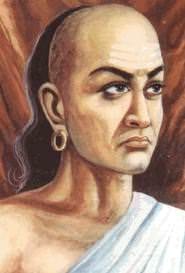
Kautilya (~400 bce) mentions Aparajita, Apratihata, Jayanta, Vaijayanta, Shiva, Vaishravana, Ashvins in his Artha shastra - Book 2, Chapter 4 - BUILDINGS WITHIN THE FORT.
However, he did not mention present day deities Vishnu, Parvati, Skanda, Ganesha, etc.
====
Interestingly, Pāṇini mentions of Vāsudeva (Sutra 4.3.98: "Vāsudevārjunābhyāṁ hun") in his Aṣṭādhyāyī, as a divinity.
Sage Vyasa mentions the Mahabharata’s character Krishna as Vāsudeva – son of Vasudeva.
Pāṇini explains how to derive words for "devotees" (bhaktas) of Vāsudeva and Arjuna. Pāṇini's role was to record the spoken and cultural idioms of his time. He explicitly notes that Vāsudeva is treated as a person of divine status rather than just a Kshatriya warrior hero.
===
We have to remember that Pāṇini (~600 BCE) existed in region of Gandhara/Taxila area (present day Pakistan), while Kautilya or Chanakya existed in the Magadha region (present day Patna, Bihar).
In Kautilya's Arthashastra, Sankarshana (Balarama) was mentioned in Book XIII ("Strategic Means to Capture a Fortress"), Chapter 3 ("The Work of Spies in a Siege").
"Spies disguised as ascetics with shaved head or braided hair and pretending to be the worshippers of god, Sankarshana, may mix their sacrificial beverage with the juice of the madana plant (and give it to the cowherds), and carry off the cattle."
Thus, we can infer that though the Sankarshana (Balarama) worship was known to Kautilya, that practice was not in vogue in Magadha.
===
Thus, mention of Vāsudeva by Pāṇini (~600 BCE) in his Aṣṭādhyāyī as a divinity, but omission of the same by Kautilya (~400 BCE) in his Artha Shastra (Book 2, Chapter 4 - BUILDINGS WITHIN THE FORT), indicate that adoration of Vāsudeva as a divinity which existed in Gandhara/Taxila area (~600 BCE), was not in existence in Magadha area even by ~400 BCE timeline.
====
It is further more interesting to note that though Ayodhya exists in proximity to Magadha kingdom, even Rama of Ramayana was not mentioned as a divinity by Kautilya in his Artha Shastra (Book 2, Chapter 4 - BUILDINGS WITHIN THE FORT), indicating that adoration of Shri Rama as a divinity was not in vogue, during ~400 BCE timeline, though Ravana was mentioned in his Artha Shastra.
It may indicate that Rama of Ramayana was viewed as a role model for human beings, but not as a divinity or the incarnation of Vishnu by the people in ~400 BCE timeline.
===
Hence, Vaishnavism, Shaktism, Shaivism in their present form did not exist in Kautilya’s (Chanakya) period (~400 BCE).

No comments:
Post a Comment